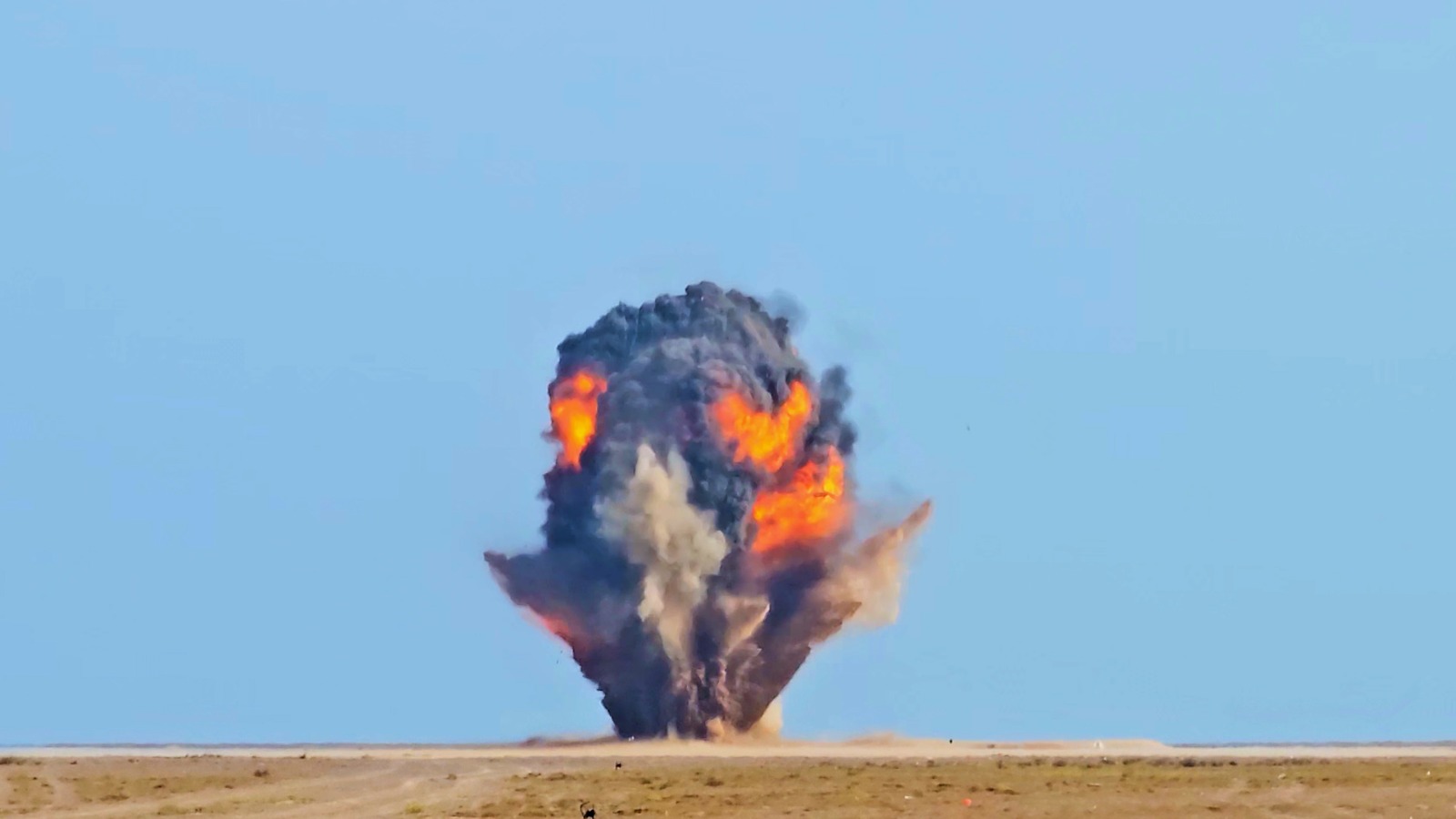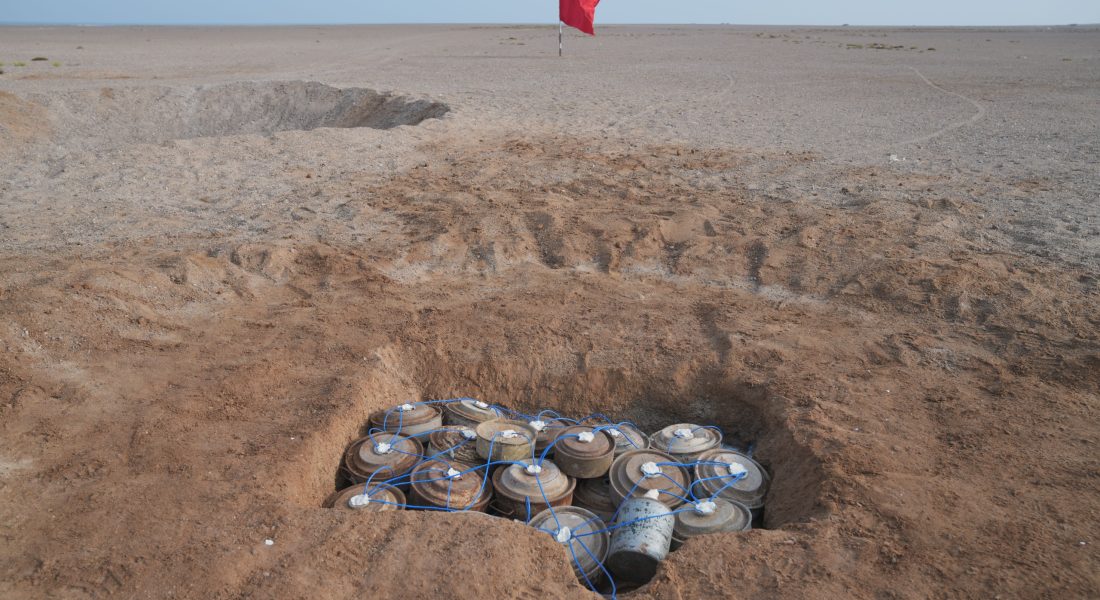
Project Masam has safely destroyed 5,926 mines and explosive remnants of war on Wednesday morning (17 June) in the Bab al-Mandab area of Taiz Governorate, western Yemen, as part of its ongoing mission to protect civilians and clear contaminated land of deadly explosive hazards.
The destroyed items included 116 assorted shells, 2,722 assorted fuzes, 2,971 rounds of assorted ammunition, 42 anti-personnel mines, 56 anti-tank mines, two hand grenades, eight IEDs, and four assorted missiles, bringing the total number of destroyed mines and explosive remnants to 5,926.
Speaking to Project Masam’s Media Office, Engineer Adeeb Rajab said the items had been collected by project teams operating along Yemen’s western coast over the past two months during ongoing survey and clearance operations in areas contaminated by mines and UXO.
Rajab explained that Project Masam specialists carefully selected the bulk demolition site after confirming that it met international standards for the safe disposal of explosive remnants of war, ensuring the operation was conducted in accordance with the highest safety requirements.
He noted that the destroyed remnants posed a direct threat to civilian lives, particularly because many of the items had deteriorated as a result of prolonged exposure to weather conditions and corrosion, increasing the risk of accidental explosions. He added that their disposal represents an important step toward reducing the dangers faced by residents in liberated areas and improving overall community safety.
Project Masam continues to conduct mine clearance and explosive ordnance disposal operations across several Yemeni governorates, working to protect civilians and secure roads, agricultural land, grazing areas, and communities from the ongoing threat posed by mines and other explosive remnants of war.