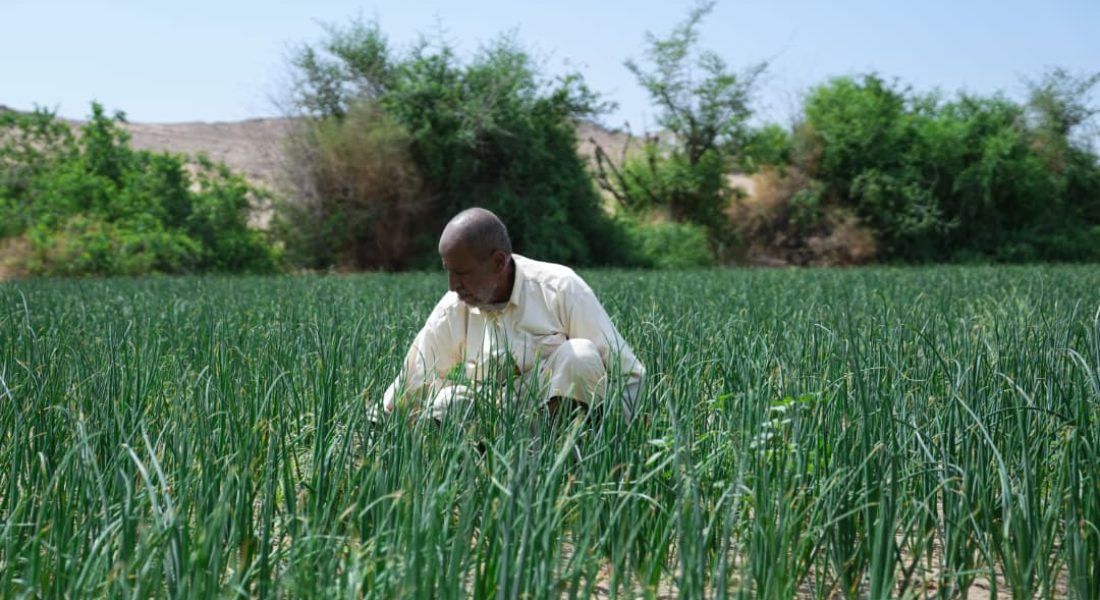
This week marked World Rural Development Day, providing an opportunity to reflect on the vital role that safe access to land plays in supporting rural livelihoods and long-term recovery in Yemen.
According to the World Bank, agriculture provides a source of income for around 73% of Yemen’s population, directly or indirectly, while the sector continues to employ more than half of the country’s workforce. For millions of Yemenis, farming, livestock and access to natural resources remain the foundation of daily life and household income.
Yet years of conflict have left large areas of agricultural land contaminated by landmines and explosive remnants of war. In many rural communities, the consequences extend well beyond the immediate risk of explosion.
After eight years of humanitarian Mine Action in Yemen, Project Masam has seen first-hand how landmine contamination disrupts every aspect of rural life. When farmland, irrigation channels, grazing areas and rural access roads become unsafe, families are unable to cultivate crops, move livestock, access water sources or reach local markets. The result is not only a protection challenge but also a barrier to food production, livelihoods and long-term recovery.
This reality is reflected in Project Masam’s operations across Yemen. In Midi District, Hajjah Governorate, one of Yemen’s most heavily mine-contaminated agricultural areas, Project Masam’s teams have now cleared more than 10,600 landmines, unexploded ordnance and improvised explosive devices, making over 3.66 million square metres of land safe. Recent operations by Team 37 removed 180 anti-tank mines and three improvised explosive devices (IEDs) from farmland, allowing local farmers to begin returning to land that had remained inaccessible for years.
Elsewhere in Hajjah, Project Masam teams recently responded to reports of landmines surrounding water pumping stations serving farming communities near Midi. By clearing the contamination, they helped restore safe access to a vital resource used for irrigation, livestock and domestic water supply.
Across Yemen, Project Masam has also carried out clearance operations around wells, irrigation networks, grazing land, agricultural roads and villages, recognising that restoring rural livelihoods depends not only on making fields safe, but also on ensuring communities can safely reach and use the infrastructure that supports them.
Since beginning operations in 2018, Project Masam has made more than 82.3 million square metres of land safe, reducing the threat posed by landmines and explosive remnants of war while supporting safer access to farmland, water sources and rural infrastructure.
This is why Project Masam continues to prioritise clearance operations in Yemen’s rural communities, to help restore safe access to land, protect livelihoods and support long-term recovery.