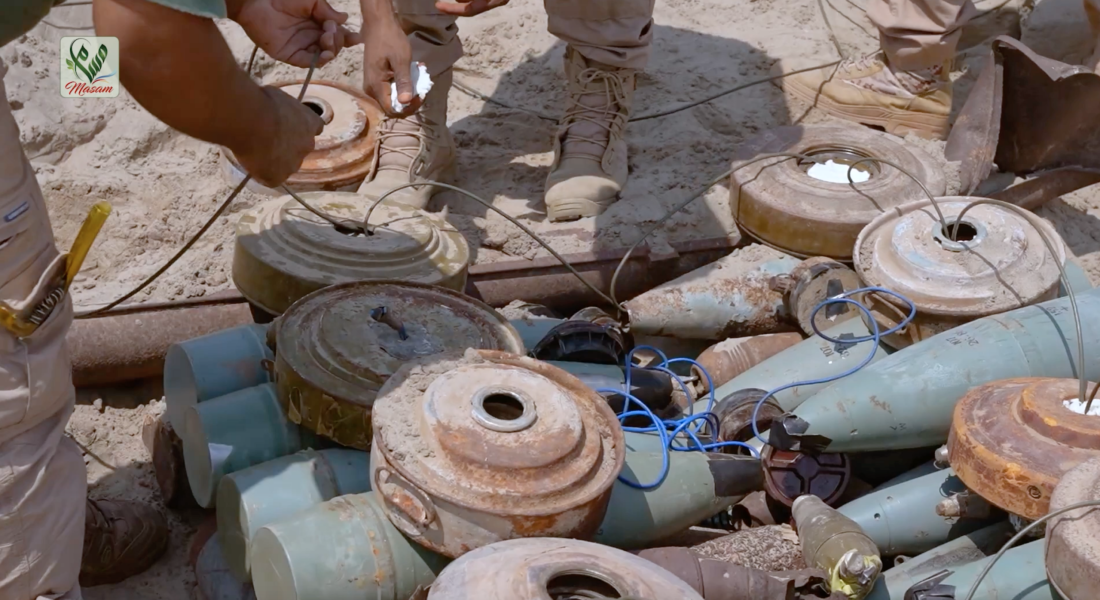
Project Masam has located and cleared 597,031 landmines and explosive threats across Yemen’s liberated areas since operations began in 2018, according to the latest cumulative figures covering activities up to 16 October 2026.
This total includes 7,809 anti-personnel mines, 153,213 anti-tank mines, 427,316 items of unexploded ordnance (UXO) and 8,693 improvised explosive devices (IEDs). Through these operations, 86,314,247 square metres of land have been cleared, supporting safer access to homes, livelihoods, infrastructure and humanitarian assistance across multiple governorates.
Since the conflict escalated in 2014, large areas of Yemen have been contaminated by landmines and explosive remnants of war, particularly in formerly contested and strategically significant regions. Earlier estimates suggested that between one and two million mines had been laid nationwide by the Houthis, but those figures predate the latest escalation and are increasingly likely to understate the true scale of contamination given recent reports and visual evidence of fresh Houthi mine-laying in Taiz Governorate and along the Red Sea Coast. Project Masam has documented newly laid anti-tank mine belts, IEDs and renewed contamination in areas its teams had previously worked to clear.
The renewed fighting has also sharply worsened Yemen’s humanitarian crisis. More than 200,000 people have been displaced during the latest escalation, around half of them from Taiz, according to recent analysis by the United Nations (UN), while the true figure may be higher because humanitarian agencies have lost access to some Houthi-controlled areas. Earlier in October, WFP had already warned that escalating conflict was driving rapidly worsening food insecurity and restricting humanitarian access, with 18.3 million people facing acute food insecurity across Yemen.
Fresh mine-laying by the Houthis is compounding that displacement by making return dangerous even after fighting moves away. Newly contaminated roads, farmland, villages and access routes can prevent families from returning home, prolong displacement and force mine action teams to survey and clear areas that had previously been made safer.
During the latest reporting week, from 10 to 16 October 2026, Project Masam teams cleared 995 explosive threats, including 50 anti-personnel mines, 39 anti-tank mines, 902 items of UXO and four IEDs. Clearance operations covered 135,103 square metres of land.
Project Masam remains operational despite significant security restrictions, combining clearance, safe disposal and Explosive Ordnance Risk Education to reduce the threat posed by explosive ordnance and protect communities living and working in affected areas.
Teams prioritise villages, agricultural land, schools, water infrastructure and access routes where mines, UXO and IEDs can restrict civilian movement and prevent communities from safely reaching the places and services they depend on.
The latest escalation has therefore added a new layer to Yemen’s already extensive contamination problem: legacy minefields and explosive remnants remain, while fresh mines and IEDs are being laid as frontlines shift. That combination is increasing both the risk to civilians and the scale of survey, clearance and emergency-response work required in the months and years ahead.
Seasonal sand movement and flooding, difficult terrain, renewed contamination and restricted access further complicate operations, but Project Masam remains committed to sustained humanitarian mine action wherever conditions allow.