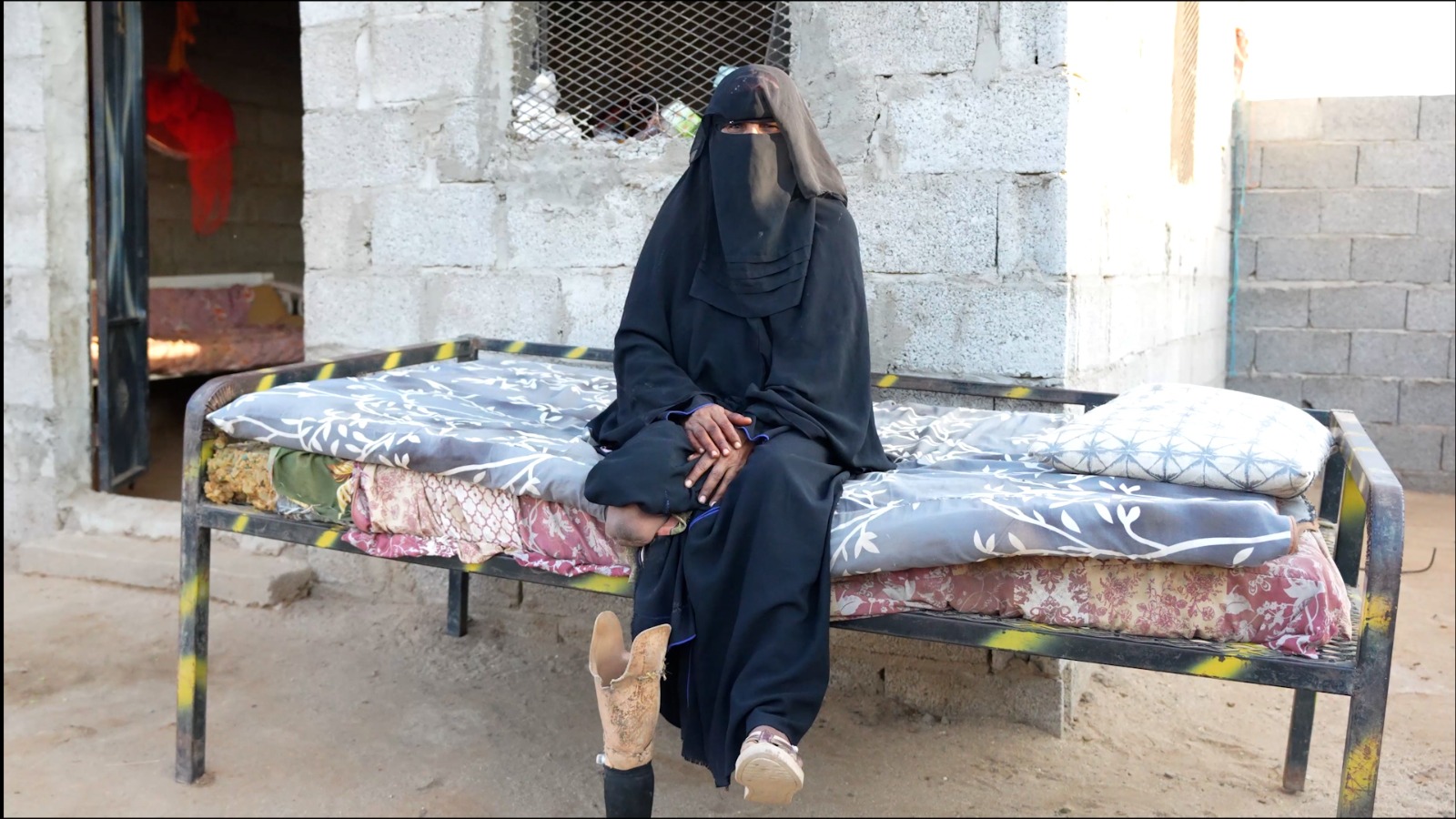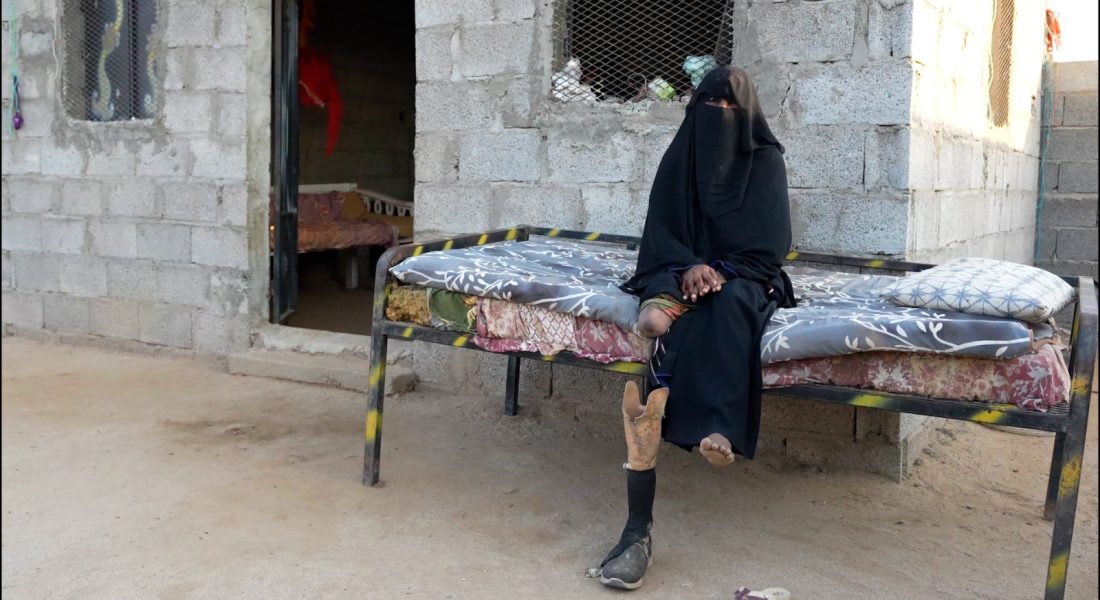
Fatima Zailai, a 60-year-old woman from Al-Deir village in Hiran District, north of Hajjah Governorate, was seriously injured when a landmine exploded as she walked to a nearby farm to collect fodder for her family’s livestock.
The incident took place as Fatima was carrying out a routine task that had long formed part of her family’s daily livelihood. She was walking along a road near her home when the landmine detonated, causing severe injuries to her right leg and leaving her with a permanent disability.
Recalling the incident, Fatima told Project Masam: “I went out to feed the sheep, and on my way, I stepped on a landmine. It exploded and severely injured my right leg. Now I am confined to a wheelchair at home, and I continue to suffer from the consequences of that injury.”
Fatima said the presence of landmines continues to affect daily life for residents in the area, particularly those who rely on farming and livestock.
“Mines have been planted everywhere. If we go out with our livestock, we risk being killed. If we go to our farms, we risk being killed as well. The mines are scattered across our roads and agricultural lands.”
Before the explosion, Fatima regularly contributed to her family’s agricultural work and helped care for their livestock. Since the injury, she has faced the daily challenges of living with a disability and now requires assistance with tasks she previously carried out independently.
Her case reflects the wider impact of landmines and explosive remnants of war in mine-affected communities across the liberated areas of northern Hajjah Governorate. Civilians of all ages, including women and children, continue to face risks from explosive hazards left in roads, farmland, and residential areas. Local reports indicate that landmine contamination has restricted civilian movement, disrupted farming and livestock activities, and affected recovery and stability in a number of communities.
For residents of Al-Deir and surrounding areas, routine activities such as tending livestock, working in fields, or using local roads continue to carry serious risks where explosive hazards remain present.
As communities work to recover, landmines remain one of the major obstacles to restoring normal life. Long after frontlines have shifted, these explosive hazards continue to cause injuries, create fear, restrict livelihoods, and leave survivors facing long-term physical and psychological consequences.
Fatima continues to live with the effects of the explosion that changed her life, while hoping that landmines will be removed from the roads, farms, and areas used daily by her community.