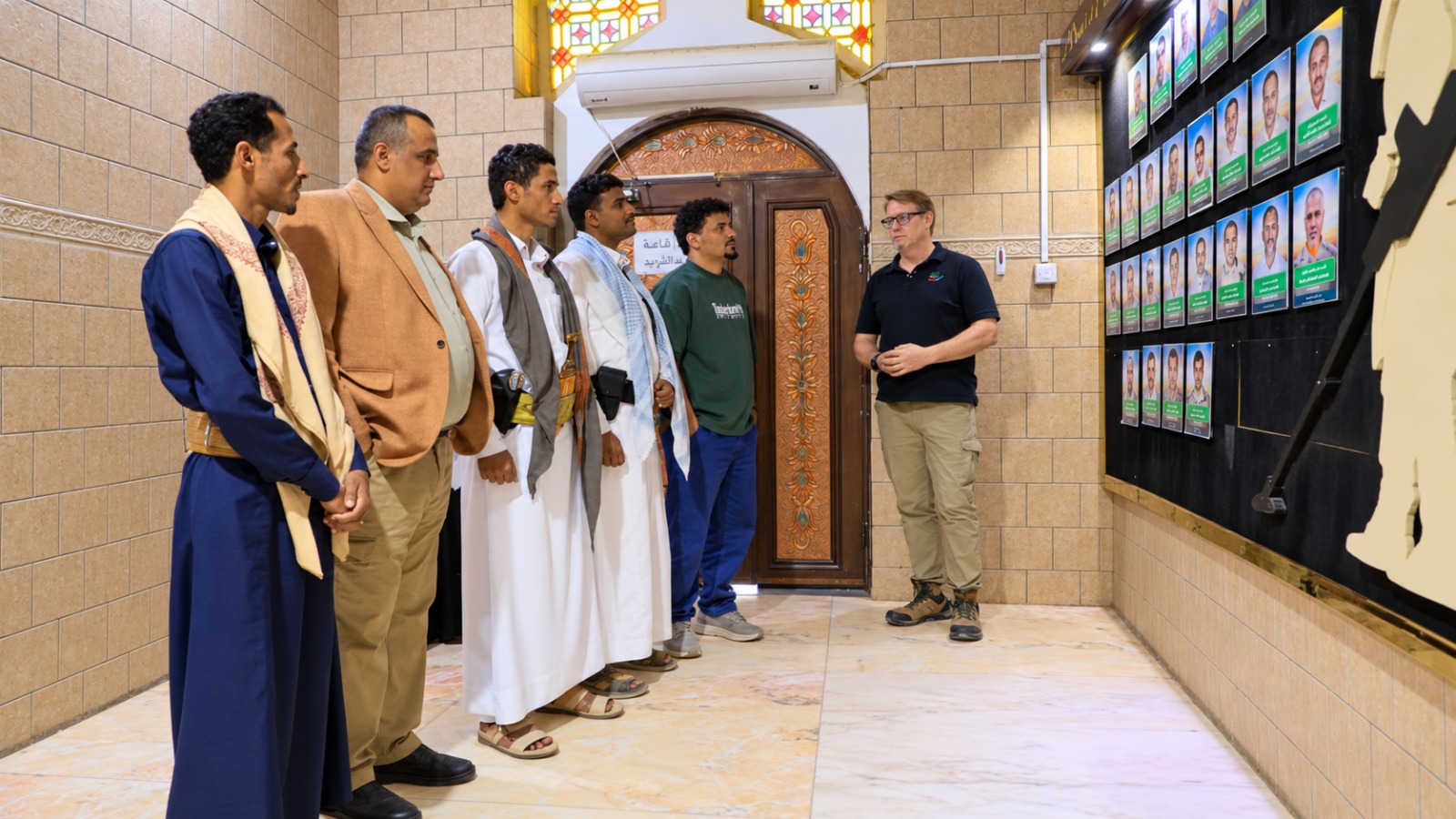
Yemeni activists and media figures have praised Project Masam’s humanitarian mine action efforts during a visit to the project’s headquarters in Marib Governorate, highlighting the importance of clearance operations in protecting civilians and restoring safer access to affected communities.
Ahmed Al-Jaishi, Amer Abdul-Qawi Al-Omari and Mohammed Abdullah Al-Bakri visited the headquarters to learn more about the work of Project Masam’s engineering teams and the explosive threats they encounter across Yemen.
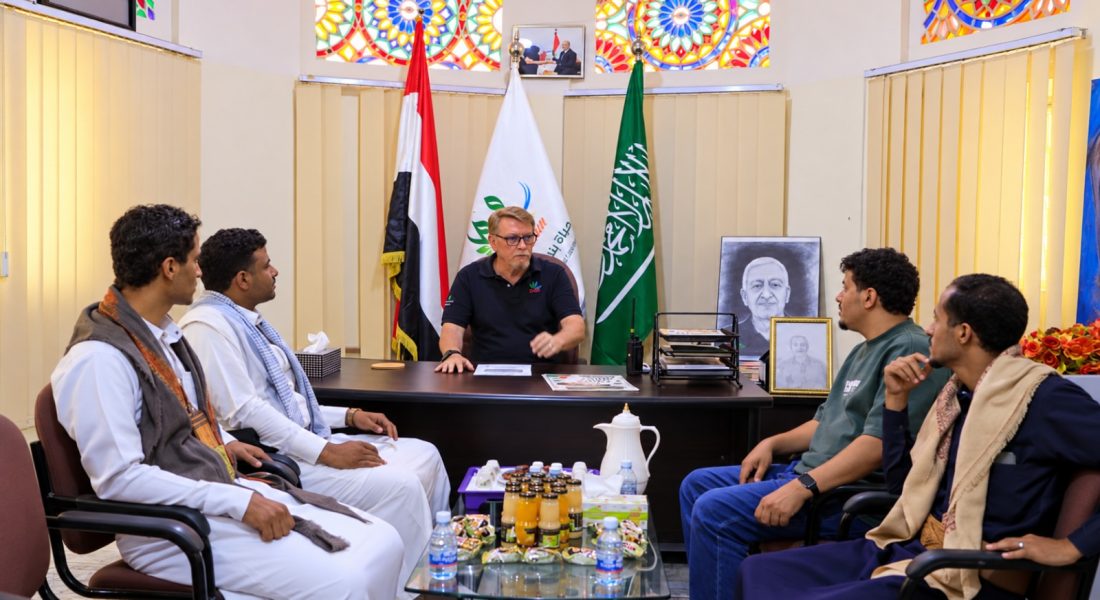
During the visit, they were briefed on operations to clear landmines, improvised explosive devices (IEDs) and unexploded ordnance (UXO), as well as the risks faced by teams working in contaminated areas.
They praised the commitment of Project Masam personnel and stressed the importance of continuing clearance operations in residential areas and other locations where explosive contamination continues to place civilians at risk.
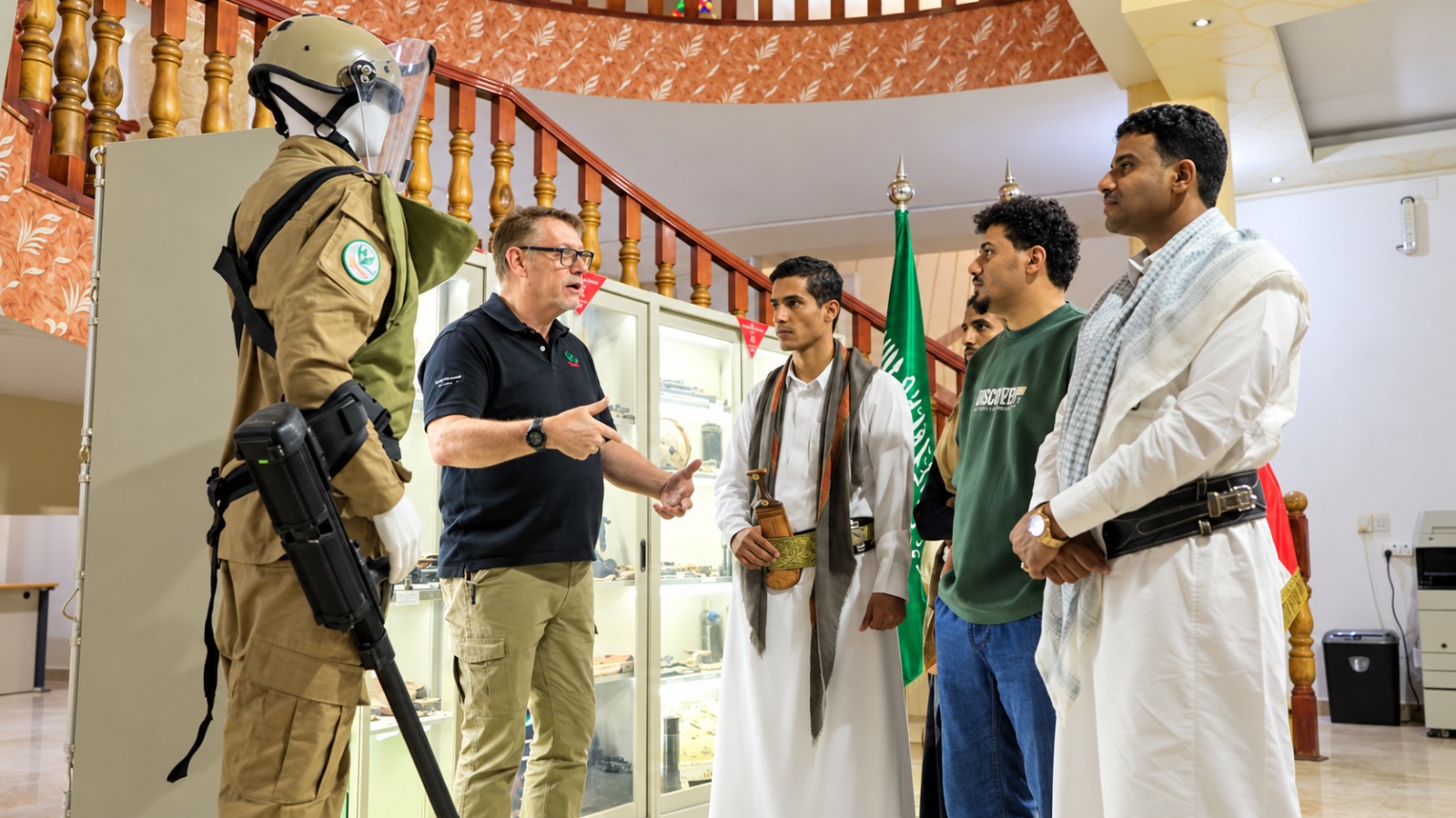
Sean Wells, Operations Manager at Project Masam’s Marib office, provided an operational briefing on the work being carried out by engineering teams in the field.
Among the issues discussed were the different types of landmines, IEDs and UXO encountered during clearance operations, together with the procedures used by teams to identify, remove and neutralise explosive threats safely.
Project Masam’s wider achievements and the challenges facing field teams in areas affected by extensive and often complex contamination were also outlined during the briefing.
For the visitors, the session offered a clearer understanding of both the technical demands of humanitarian mine action and the continuing threat posed by explosive ordnance to civilians and local communities.
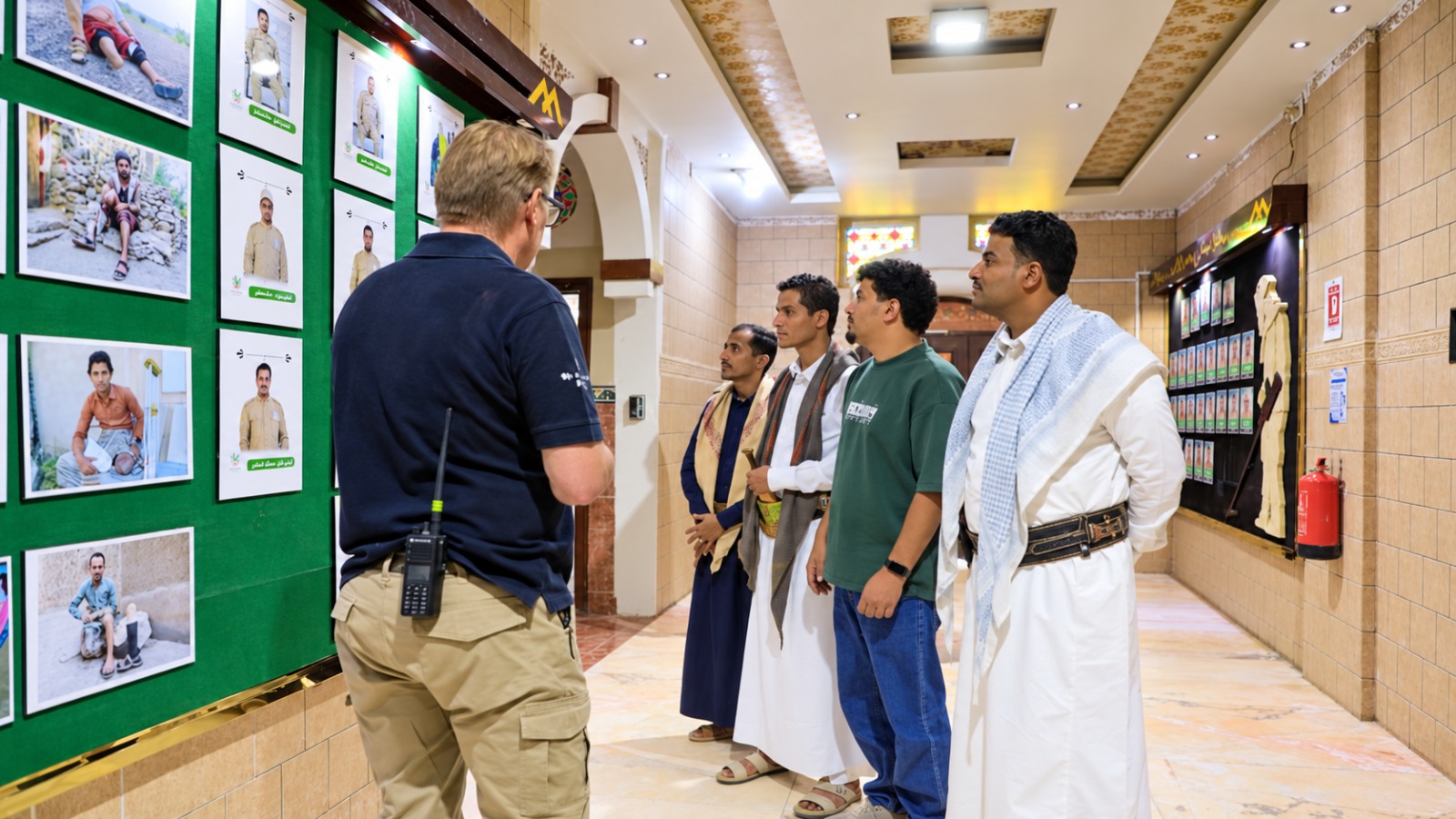
A photographic and ordnance exhibition at Project Masam’s headquarters formed another part of the visit, featuring examples of landmines and UXO recovered by teams from different parts of Yemen. Photographs on display documented the impact of explosive contamination on civilians, while recovered items demonstrated the range of threats encountered by Project Masam teams during clearance operations.
According to the visitors, the exhibition illustrated the continuing humanitarian consequences of landmines and other explosive ordnance, particularly in areas where civilians depend on contaminated roads, farmland and residential spaces.
They stressed that humanitarian mine action extends beyond the removal of explosive devices, helping communities regain safer access to homes, livelihoods and essential services while reducing the risk of further casualties.
The visit also highlighted the role of Yemeni activists and media figures in raising awareness of the civilian impact of landmines, IEDs and UXO, and of the continuing need for sustained clearance operations across affected areas of Yemen.