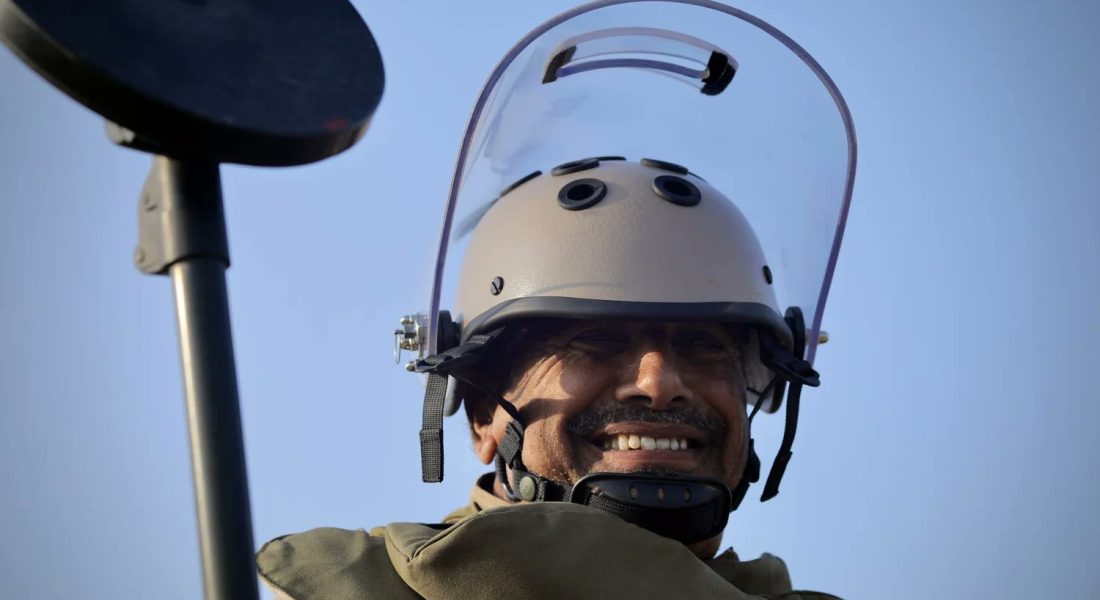
On World Humanitarian Day, Project Masam joins the international humanitarian community in recognising those working in some of the world’s most difficult and dangerous environments, while remembering colleagues who have lost their lives in the service of others.
This year’s World Humanitarian Day comes amid mounting concern for the safety of humanitarian personnel worldwide. More than 1,000 humanitarian workers have been killed over the past three years, according to the United Nations, with local personnel serving their own communities accounting for the majority of those killed.
For humanitarian Mine Action personnel in Yemen, safety has a particular technical dimension. Deminers and Explosive Ordnance Disposal (EOD) specialists work directly with landmines, improvised explosive devices (IEDs) and unexploded ordnance (UXO), often in former frontline areas where contamination can be extensive, undocumented and difficult to identify.
Project Masam Managing Director Ousama Algosaibi has previously highlighted the complexity of the threat, including improvised mines using different initiation systems and devices specifically designed to target demining personnel. The absence of minefield maps further increases the risks teams must manage during clearance operations.
Protecting those personnel therefore begins long before a deminer enters a suspected hazardous area: training, accreditation, personal protective equipment (PPE), medical preparedness, communications, security assessments, operational planning and strict technical procedures all form part of the wider system required to manage risk. Project Masam’s technical experts train Yemeni deminers to work in accordance with International Mine Action Standards (IMAS).
Behind the deminers and EOD specialists are also medics, ambulance drivers, security specialists, operations and logistics personnel, technical advisers, community liaison and EORE teams, and many others whose expertise enables humanitarian clearance to take place safely.
“Our responsibility begins with the safety of the people we ask to carry out this work,” Algosaibi said on the occasion of World Humanitarian Day. “Our deminers and EOD specialists operate around explosive hazards every day, but behind every person in the field is a much wider team working to manage those risks.
“On World Humanitarian Day, we remember the colleagues we have lost, and we recognise every person who continues this work to protect others.”
Protecting humanitarian workers protects humanitarian action
The safety of Mine Action personnel has consequences far beyond individual clearance teams. In Yemen, landmines and explosive remnants of war can restrict access to communities, agricultural land, water sources, roads, schools and other civilian infrastructure. Removing those hazards can allow families to return home, farmers to resume their livelihoods and other humanitarian organisations to reach communities more safely.
Protecting the people carrying out clearance therefore helps protect the wider humanitarian response: without safe and sustained Mine Action, explosive contamination can continue to restrict both civilian movement and humanitarian access.
This relationship between the protection of humanitarian personnel and the continuation of life-saving assistance is central to World Humanitarian Day. The United Nations has warned that attacks and other threats against humanitarian workers have consequences for entire communities when essential services and assistance are interrupted.
Remembering Project Masam’s fallen colleagues
For Project Masam, World Humanitarian Day is also a day of remembrance. Since operations began in Yemen in 2018, 33 Project Masam personnel have lost their lives in the line of duty, while others have suffered injuries carrying out the project’s humanitarian mission.
Among those remembered are five explosive ordnance specialists who were killed in Marib in 2019 while undertaking their work to protect Yemeni communities from explosive hazards. Their contribution remains part of Project Masam’s mission and a reminder of the very real risks borne by those working to make contaminated communities safe.
As the international community marks World Humanitarian Day, Project Masam honours its fallen colleagues, its teams working across Yemen today, and humanitarian personnel everywhere who continue to serve communities despite increasingly difficult and dangerous operating environments.
Protecting those workers, providing them with the training, resources and operational support they require, and ensuring they can carry out their work safely remain fundamental to protecting the people humanitarian action exists to serve.