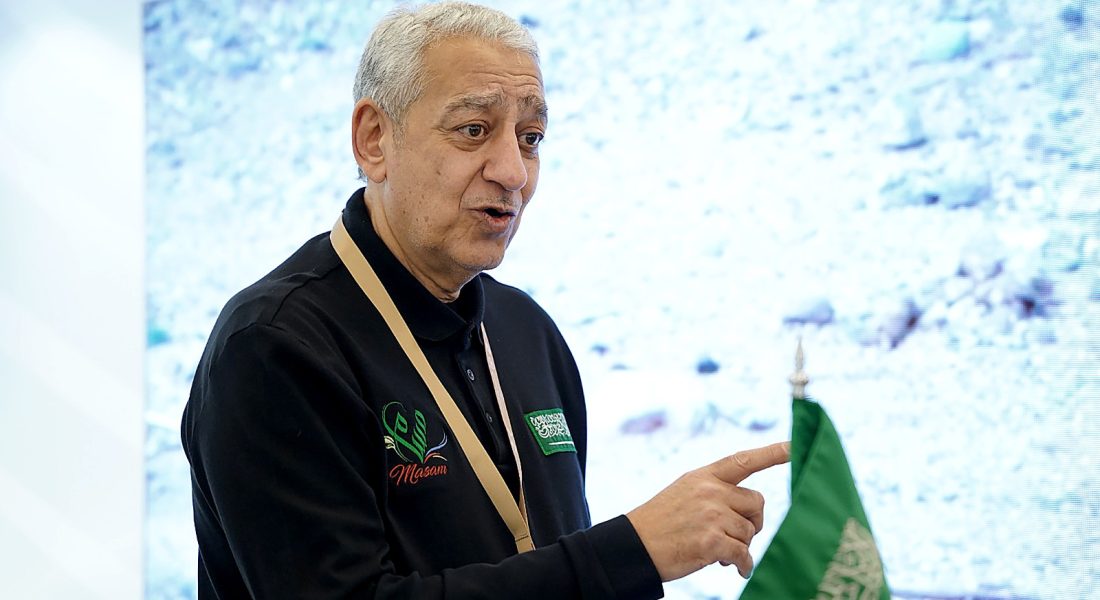
Ousama Algosaibi, Managing Director of Project Masam, has confirmed that all project teams continue to operate according to their established schedules, while Special Tasks Teams and Rapid Response Teams remain ready to respond to emergencies within their areas of operation in Yemen’s liberated territories.
His comments come amid intensified military activity in Yemen and continuing reports that Houthi forces are laying additional landmines in areas under their control and along operational routes.
Algosaibi said such reports underline the continuing threat posed to civilians by newly laid mines and the risk that communities may be forced to flee contaminated areas.
“At Project Masam, we remain committed to our humanitarian mission and our responsibility to secure roads, farmland and other civilian areas, regardless of the circumstances or military activity taking place near our areas of operation,” he said.
He added that Project Masam teams have intensified Explosive Ordnance Risk Education (EORE) activities on the dangers posed by landmines, improvised explosive devices (IEDs) and explosive remnants of war, with particular attention given to women and children, who remain especially vulnerable to these hazards.
Algosaibi said Project Masam continues to adapt its operational planning as Houthi forces develop new methods of manufacturing and deploying landmines and IEDs.
“Our experts continuously review and update operational plans so that our teams are prepared to deal with evolving explosive threats,” he said.
He warned that a rise in landmine and explosive ordnance casualties remains a serious concern as military activity continues, particularly in areas already heavily contaminated by years of mine-laying and explosive remnants of war.
Project Masam currently has 45 engineering teams deployed across areas controlled by Yemen’s internationally-recognised government. Algosaibi praised the professionalism and commitment of the teams, which have continued operations despite incidents of shelling several kilometres from some areas of work and reports of drones operating overhead near certain locations.
He said Project Masam’s operations rooms remain active around the clock to receive reports from civilians and coordinate emergency responses.
Demolition operations are also continuing according to established procedures, with recovered explosive items destroyed rather than stored once disposal arrangements are in place.
Algosaibi said Project Masam documents demolition operations through photographic and video records, helping preserve evidence of the scale and nature of Yemen’s explosive contamination.
The Managing Director also thanked the Yemeni government, provincial governors, local authorities, military leaders, the Yemeni Armed Forces and security agencies for their continued support for Project Masam’s teams.
He also praised the work of the National Mine Action Committee, led by Major General Amin Al-Aqili, the Yemen Executive Mine Action Centre (YEMAC), and its Aden branch, led by Brigadier General Qaed Haitham, for their continued cooperation and coordination with Project Masam.
As of 25 September 2026, Project Masam had cleared 593,489 landmines and other explosive threats, including 7,735 anti-personnel mines, 153,107 anti-tank mines, 423,960 items of unexploded ordnance and 8,687 IEDs. Teams had also cleared 85.8 million square metres of land.