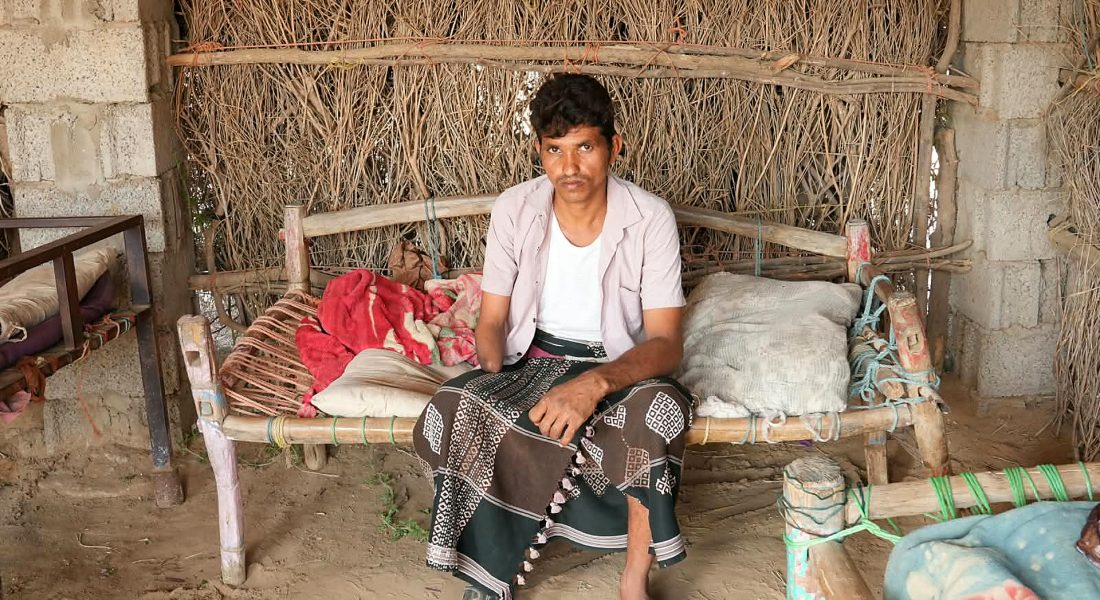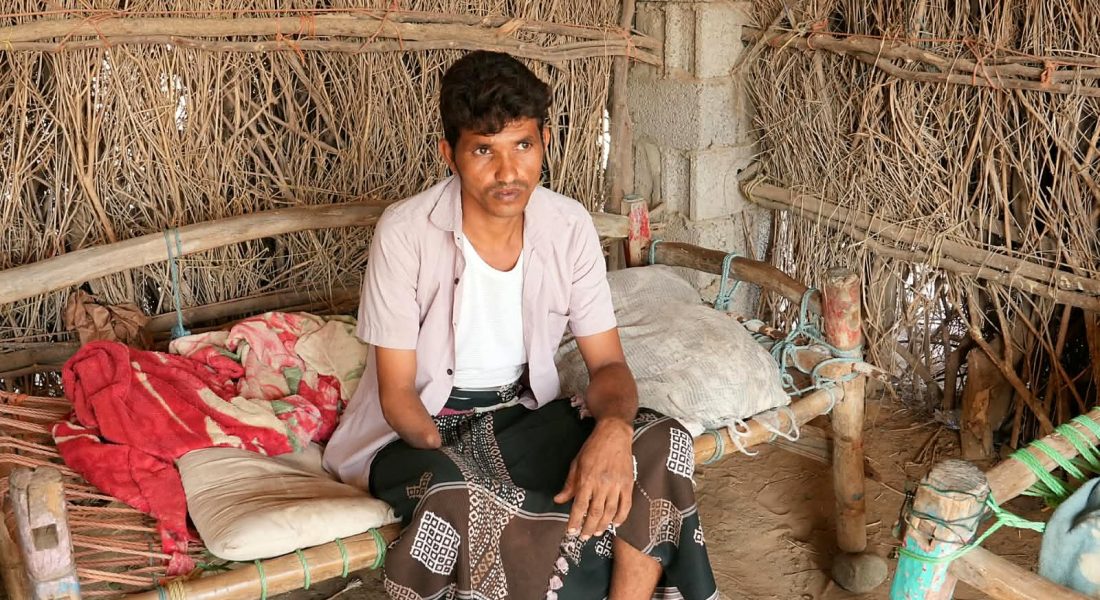
After more than four years away from his farm because of the war, Abdullah Husaini returned to his land in Hayran District, northern Hajjah Governorate, hoping to resume work and rebuild his livelihood.
One morning, while ploughing the field, he noticed an unfamiliar object in the soil. When he touched it, it exploded and severed his hand.
“I returned to work on my farm after being away for more than four years,” Abdullah, who is in his twenties, told Project Masam’s media office in his home. “Early one morning, while ploughing the land, I noticed a strange object. I touched it, and it suddenly exploded, severing my hand.”
He said the incident changed the way he viewed the land he had waited years to return to.
“We never imagined that our land would become a source of terror and that it would devastate our lives,” he said.
Before the explosion, farming had been Abdullah’s main source of income. He had hoped that returning home would allow him to restart the work he had been forced to leave behind. Instead, the injury left him unable to farm as he had before.
According to Abdullah’s account, the area had been heavily mined by Houthi forces before it was recaptured by government forces.
Finding another way to support his family
Losing his hand changed Abdullah’s daily life and his ability to work, but he was determined to continue supporting his family.
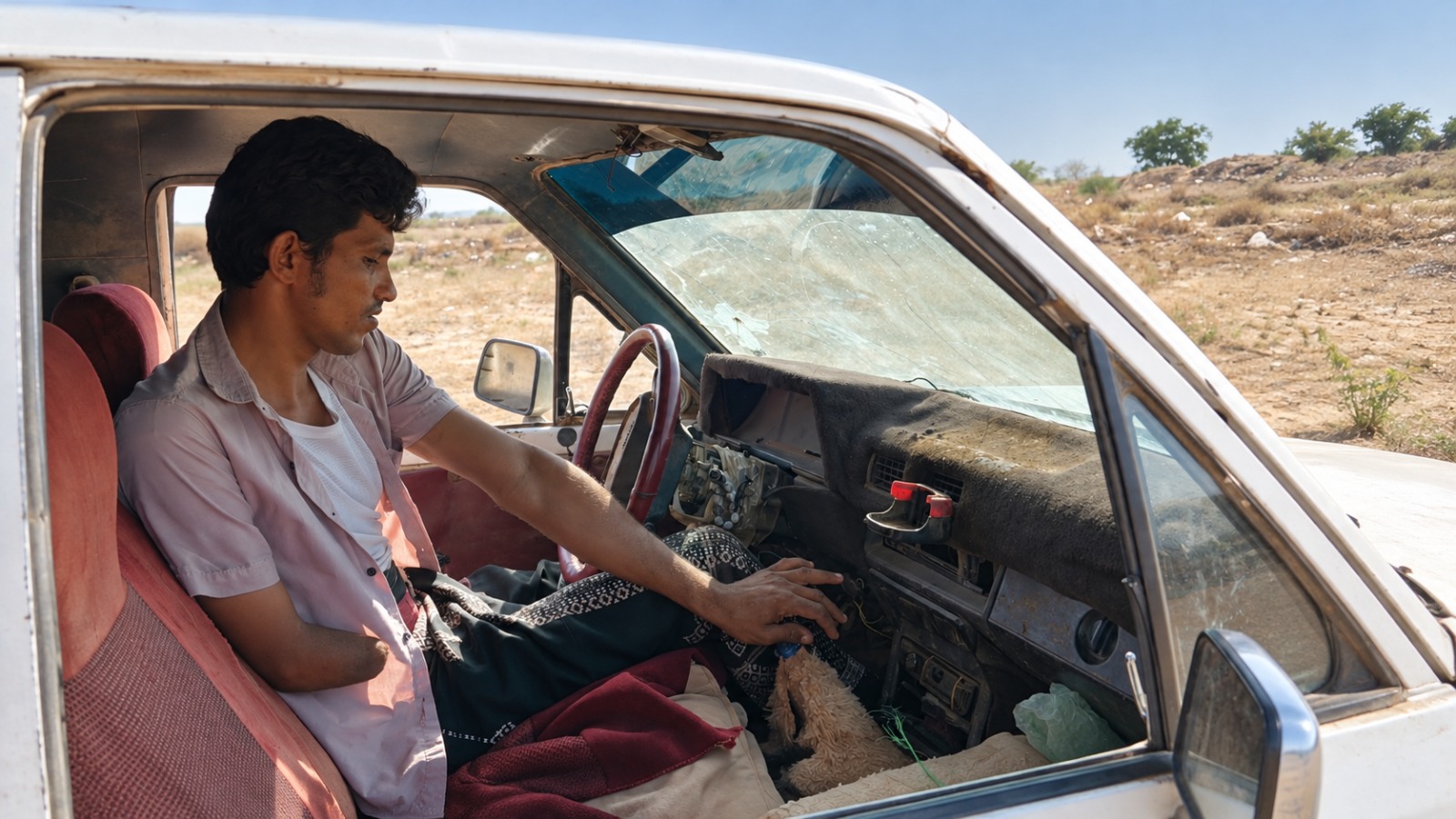
Unable to return to farming in the same way, he found another source of income and now works as a driver, transporting passengers between Midi and Hayran districts. The work allows him to provide for his family of five.
Although he can no longer cultivate the land he spent years waiting to return to, Abdullah has found another way to earn a living and support those who depend on him.
His experience also shows how the consequences of explosive contamination can extend far beyond the moment of an explosion.
The wider impact of contamination
Abdullah’s story reflects the risks faced by civilians living in mine-affected areas of northern Hajjah Governorate, where landmines and other explosive hazards can remain in farmland, along roads and around areas used by farmers, herders and local residents.
The impact can be long term. Survivors may be left with permanent injuries, while families can lose access to farmland, livestock, income and other sources of livelihood.
For Abdullah, returning home did not bring the return to normal life he had hoped for. The explosion forced him to leave farming and find another way to support his family.
His experience is also a reminder of why clearance remains so important in areas where civilians are trying to return, work and rebuild their lives.
The consequences of a landmine can continue for years after the explosion itself, affecting a survivor’s health, work and family. Abdullah’s determination to keep working despite his injury shows the difficult choices many survivors make as they adapt to life after an explosive incident.