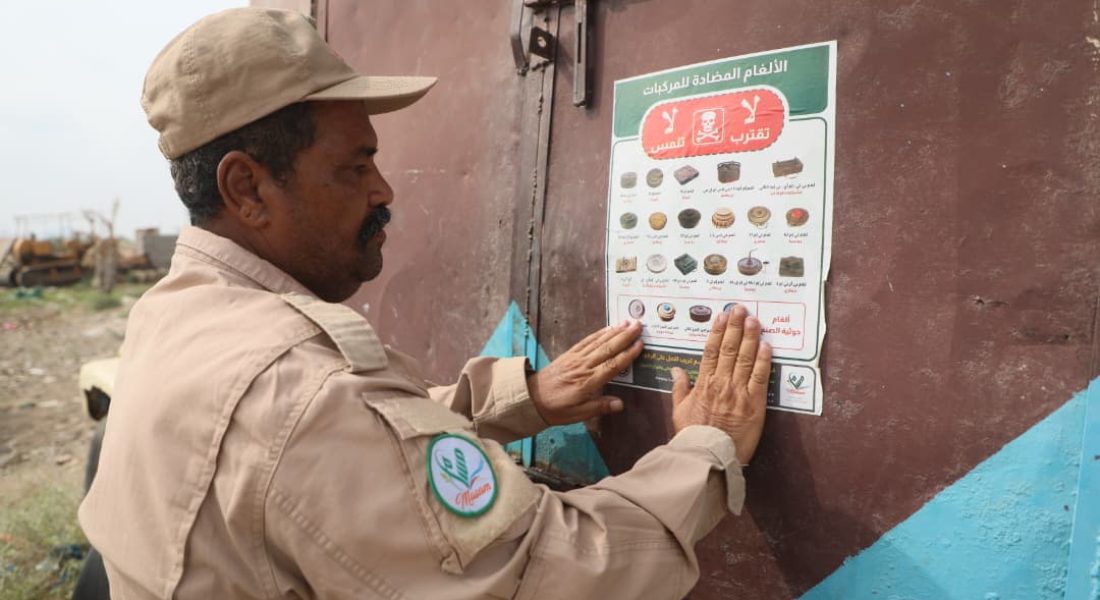
Project Masam has issued a renewed safety warning to civilians following an increase in hostilities in several parts of Yemen, highlighting the risk that recent fighting may leave behind new unexploded ordnance (UXO) and other explosive hazards.
The warning follows renewed missile and drone attacks, artillery fire and clashes across several parts of Yemen, including Marib, Taiz, Al Dhale, Al Jawf, Hadramawt and areas along the western Red Sea coast, including Mokha and Al Khokha. Many of these areas are already affected by extensive explosive contamination from previous phases of the conflict.
Project Masam is urging people living in or travelling through areas affected by recent hostilities to exercise particular caution and avoid approaching, touching or attempting to move any suspicious objects or explosive remnants.
One of the most important risks following renewed fighting is that an area previously considered safe may become contaminated again.
New artillery fire, missile or drone strikes and other hostilities can leave unexploded ordnance in locations where no explosive hazard was previously present. This means roads, agricultural land, residential areas and other locations that civilians have previously used safely may require renewed assessment following fighting.
Renewed Houthi mobilisation also raises another serious concern: the potential laying of new landmines and IED belts as forces move, establish positions or reinforce frontlines. Project Masam has repeatedly documented Houthi-laid mines and improvised explosive devices across former conflict areas in Yemen, meaning communities could face new deliberate contamination alongside the UXO generated by renewed hostilities.
Civilians returning to an area after an attack or period of clashes should therefore not assume that previous clearance, familiarity with the location or its regular use means that it remains free from explosive hazards.
Unexploded ordnance can remain lethal
Not every munition functions as intended when fired or deployed, and those that fail to explode can remain dangerous after an attack has ended, sometimes lying partially concealed among rubble, vegetation, agricultural land or other debris.
Project Masam is reminding civilians never to approach or handle suspected UXO, landmines or other unfamiliar explosive items.
People encountering a suspicious object should stop, keep their distance, warn others away from the location and report it to the relevant authorities or Project Masam teams where available. Children should also be warned never to touch or pick up unfamiliar objects, particularly in locations recently affected by fighting.
The renewed warning is particularly important for farmers, herders, displaced families and others whose daily activities may require them to move through open land, former frontline areas or locations affected by recent hostilities.
Existing contamination remains extensive
The possibility of new contamination comes as Yemen continues to face the consequences of explosive hazards accumulated over more than a decade of conflict.
Between 1 and 14 August alone, Project Masam teams cleared 7,444 explosive threats, including 7,226 items of UXO, alongside anti-personnel mines, anti-tank mines and improvised explosive devices. Teams cleared 646,550 square metres of land during the same period.
Clearance operations have been taking place across Aden, Al Dhale, Al Hudaydah, Hadramawt, Hajjah, Lahj, Marib, Shabwah and Taiz, illustrating the geographical extent of existing explosive contamination.
Renewed hostilities can add another layer of explosive hazards to this existing contamination, while changes in frontlines and population movements can expose civilians to areas they may not normally enter.
For humanitarian Mine Action teams, this can also mean returning to locations that have previously been surveyed or cleared to determine whether new hostilities have introduced additional explosive hazards.
EORE remains critical
Alongside clearance and Explosive Ordnance Disposal (EOD) operations, Project Masam continues to conduct Explosive Ordnance Risk Education (EORE) activities to help communities recognise potentially dangerous objects, understand safe behaviour and know how to report suspected hazards.
These activities become particularly important when the security situation changes and communities may encounter new or unfamiliar explosive contamination.
Project Masam urges civilians in areas affected by recent fighting to remain vigilant, follow local safety guidance and report suspected explosive hazards rather than attempting to investigate them.
An area that was safe yesterday cannot automatically be assumed to be safe following renewed hostilities. Awareness, reporting and professional assessment are essential to preventing further civilian casualties.